Wondering whether Petaluma’s West Side or East Side fits your budget, lifestyle, and home goals better? You are not alone. Many buyers start with the same question because the two sides of town can feel quite different in price, housing style, and day-to-day access. This guide breaks down what separates them so you can make a more confident move in Petaluma. Let’s dive in.
How Petaluma’s East-West Split Works
Petaluma’s east-west divide is a useful local shorthand, not a strict legal line. City planning materials describe a historic downtown on the southwest side of the Petaluma River, while US 101 splits through town and helps shape how people talk about the West Side and East Side.
In practical terms, many buyers use ZIP codes as a simple guide. For this comparison, 94952 works as the West Side proxy and 94954 works as the East Side proxy. That is also where recent pricing data shows a clear difference between the two sides.
West Side Overview
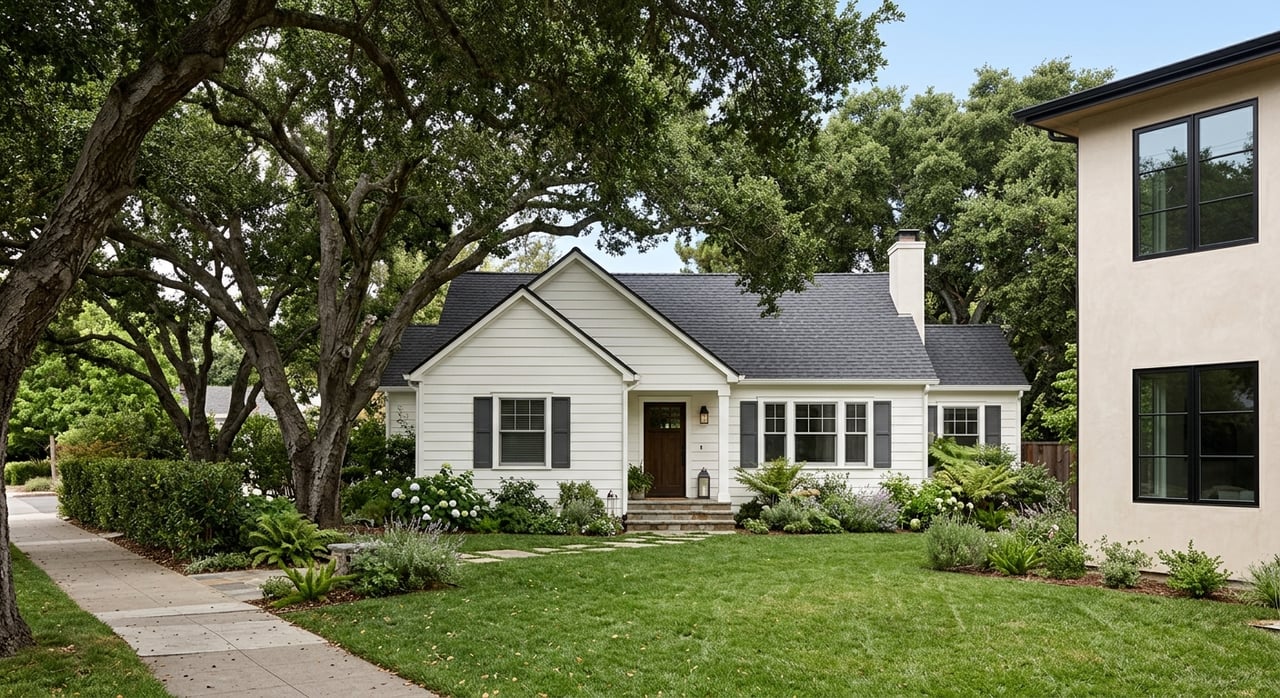
The West Side is best known for historic character, older neighborhoods, and closer access to downtown Petaluma. If you picture tree-lined blocks, established homes, and a setting with more architectural variety, this is often the side buyers have in mind.
The City’s historic district information supports that impression. Areas like Oakhill-Brewster are among Petaluma’s earliest residential neighborhoods, and downtown preserves styles such as late Victorian, Italianate, and Streamline Moderne.
West Side Home Styles
On the West Side, housing stock tends to be older and more varied. Recent listing examples include a restored Victorian from around 1880 on D Street, a 1920s Craftsman bungalow on Liberty Street, and a 1955 home on Keller Street with vintage appeal near downtown.
That mix gives the West Side a look and feel that can be hard to replicate in newer development. You may see more original details, infill opportunities, and homes with distinct floor plans rather than a more standardized suburban layout.
West Side Street Pattern
One of the biggest differences is not just the house itself, but the block it sits on. West Side streets often follow an older grid pattern with historic blocks closer to downtown.
Recent examples show lot sizes that are not necessarily huge, but are tied to a more traditional neighborhood layout. Homes cited in recent listings sit on lots of about 4,726 to 6,098 square feet, with the bigger draw often being proximity and character rather than raw lot size.
East Side Overview
The East Side tends to appeal to buyers looking for newer housing stock, more suburban planning, and easier access to Highway 101. City planning materials describe much of the East Side as newer development, including many car-oriented planned unit developments.
If your priority is a layout that feels more conventional and commuter-friendly, the East Side may line up better with your needs. It generally offers a different rhythm from the older, downtown-adjacent West Side.
East Side Home Styles
East Side homes often skew ranch, traditional, or more contemporary suburban in style. Recent examples include ranch-style and mid-century ranch homes, along with later-built single-story properties and cul-de-sac homes.
That housing mix can feel more predictable from block to block. For some buyers, that consistency is a plus because it often means a more suburban streetscape and a more familiar home layout.
East Side Street Pattern
The East Side is less defined by lot size alone and more by its street form. You are more likely to see planned neighborhoods, driveways, cul-de-sacs, and development patterns shaped around car access.
Recent examples range from about 4,225 square feet to just over 7,100 square feet. While lot sizes vary on both sides of town, the East Side is more consistently tied to suburban planning and freeway-oriented convenience.
West Side Vs East Side Prices
For many buyers, price is where the difference becomes most obvious. Recent Redfin data for the latest three-month window shows a median sale price of $1,074,681 in 94952 and $839,751 in 94954.
That gap reflects the premium often attached to the West Side’s historic homes and downtown-adjacent location. It also helps explain why many buyers see the East Side as the more value-oriented option within Petaluma.
Price Per Square Foot
The pricing gap also shows up in cost per square foot. Recent figures place 94952 at $637 per square foot and 94954 at $533 per square foot.
That does not mean every West Side home costs more than every East Side home. It does mean the West Side market generally commands a stronger premium, especially when a home combines character, condition, and location.
Typical Price Ranges
Recent sales examples show how the ranges can play out in real life. On the West Side, recent examples include a sale at $1.185 million on Keller Street and a much higher sale at $2.26 million on D Street.
On the East Side, recent examples include homes selling at $825,000, $849,000, and $850,000. In simple terms, the East Side tends to offer more sub-$900,000 inventory, while the West Side has a meaningfully higher ceiling.
Daily Life and Access
The lifestyle difference between the two sides often comes down to how you want to move through your day. If you want easier access to downtown, transit, and older neighborhood blocks, the West Side may feel more natural.
If you prefer easier freeway access and a more car-oriented layout, the East Side may be the better fit. Neither is universally better. It depends on what matters most to you.
Downtown and Transit Access
Downtown and transit are some of the clearest West Side advantages. The SMART downtown station sits next to the Petaluma Transit Mall and connects with Golden Gate Transit, Sonoma County Transit, Petaluma Transit, the free LumaGo shuttle, and bikeshare.
That setup can make the downtown area especially attractive if you value having transportation options nearby. Buyers who prioritize walking access to central Petaluma often start their search on the West Side for that reason.
Commuting and Road Access
Highway 101 remains Petaluma’s primary north-south access route, and CA-116 is an important secondary route to the east. That road network helps explain why the East Side is often associated with easier commuter access.
For buyers who drive often or need a more direct freeway connection, the East Side’s layout may feel more efficient. In many cases, the appeal is less about home age and more about convenience.
Crossing Between Sides
The divide is real in market terms, but Petaluma is still one city. The City notes that Lynch Creek Trail offers a convenient car-free way to cross from west to east Petaluma.
That is a good reminder that your home search does not need to treat the two sides as separate worlds. You can compare them based on price, style, and access while still thinking about Petaluma as a connected whole.
Which Side Fits You Best?
The right choice usually comes down to what you are trying to optimize. Budget, architecture, commute patterns, and how much you care about being near downtown all play a role.
Here is a simple way to think about it.
Choose the West Side If You Want
- More historic character
- Older homes with architectural variety
- Closer access to downtown Petaluma
- A market segment with a stronger premium
- Established blocks with a traditional street grid
Choose the East Side If You Want
- Newer housing stock overall
- More standardized suburban layouts
- Car-oriented neighborhood planning
- Easier access to Highway 101
- More value-driven options compared with the West Side
A Smart Way to Shop Both Sides
If you are buying in Petaluma, it helps to compare homes through the lens of trade-offs rather than labels. A beautifully updated East Side home may offer more space or a lower entry point, while a West Side home may deliver the charm and location you have been picturing from the start.
The strongest strategy is to define your must-haves before you tour. Focus on your price range, preferred home style, commute needs, and how important downtown access is to your everyday life.
If you are selling, understanding this split matters just as much. Buyers often arrive with a strong side preference, so pricing, presentation, and marketing should reflect how your home fits into that West Side or East Side story.
Whether you are comparing historic character to suburban convenience or trying to understand why one ZIP code commands a premium, local guidance can make the decision much clearer. If you want help weighing Petaluma’s West Side against the East Side, connect with Mark Spaulding for thoughtful, data-informed guidance tailored to your goals.
FAQs
What is considered Petaluma West Side versus East Side?
- In everyday real estate terms, buyers often use 94952 as a practical West Side proxy and 94954 as a practical East Side proxy, even though the split is a local shorthand rather than a strict legal boundary.
Is Petaluma West Side more expensive than East Side?
- Yes. Recent Redfin data shows 94952 with a median sale price of $1,074,681 versus $839,751 for 94954, which reflects the usual West Side premium.
What kinds of homes are common on Petaluma’s West Side?
- The West Side is known for older and more varied housing, including historic homes, Victorians, Craftsman-style properties, and other character homes near downtown.
What kinds of homes are common on Petaluma’s East Side?
- The East Side more often features newer suburban development, including ranch, traditional, and contemporary homes in planned neighborhoods and cul-de-sac settings.
Is Petaluma East Side better for commuting?
- For many buyers, yes. The East Side is commonly associated with easier Highway 101 access and a more car-oriented street network.
Is Petaluma West Side better for downtown access?
- For buyers who want closer access to downtown and transit connections, the West Side often stands out because of its location near central Petaluma and the SMART downtown station area.