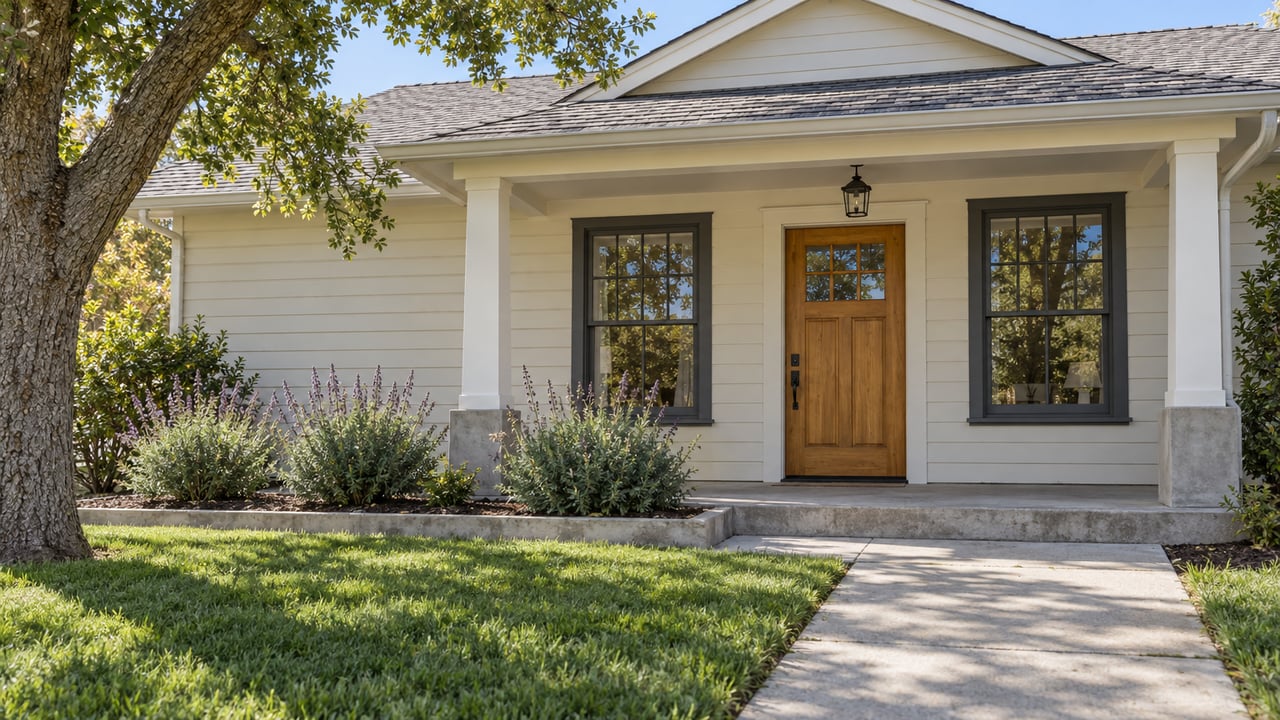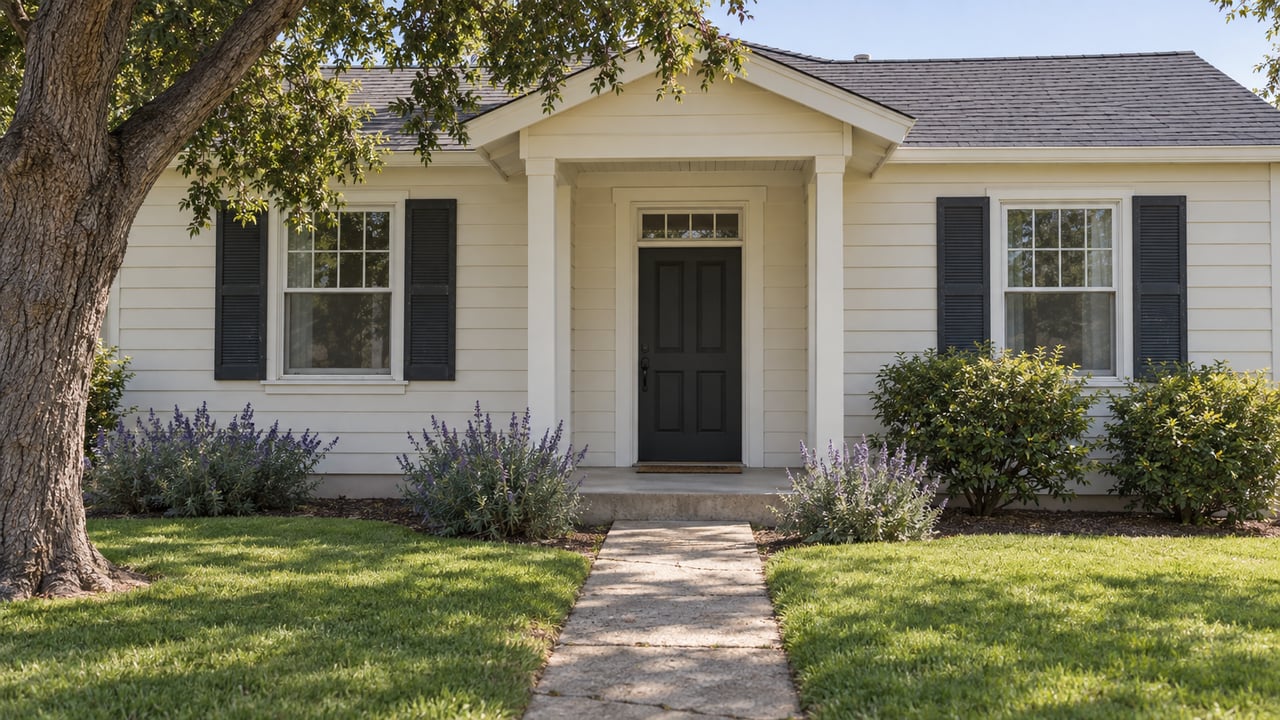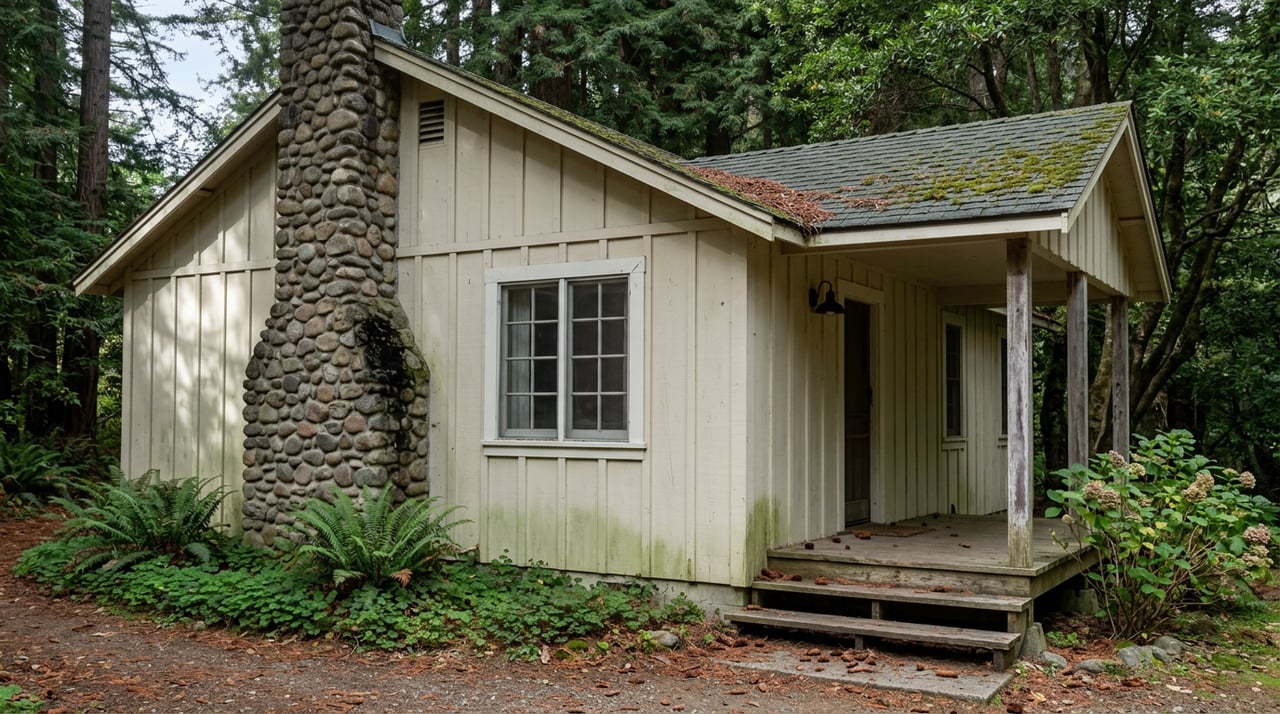
A buyer closes on a two-bedroom cabin off Old Cazadero Road, the kind of place with a woodstove, a covered porch, and a ten-minute walk to the river. The listing mentioned rental income. The buyer assumed that income traveled with the deed. It does not. In Sonoma County's unincorporated Russian River communities, Permit Sonoma says a vacation rental permit expires upon sale or transfer of the property. Whatever the previous owner was collecting on a booking platform ends at closing, and the new owner should check whether the property still qualifies under whatever rules are in effect that year.
That single rule reshapes value across Guerneville, Forestville, and Monte Rio more than any number on a listing sheet. Two cabins a few doors apart, similar age, similar size, can be worth very different amounts to a buyer because one parcel still qualifies for a rental permit and the other does not. The zoning line matters more than the kitchen.
The Permit Resets at Closing
In August 2022, Sonoma County adopted Ordinance No. 6386, which barred R1-zoned parcels from qualifying for new vacation rental permits going forward. A large share of Russian River housing stock sits inside R1 zoning, so a meaningful slice of Guerneville, Forestville, and Monte Rio homes lost eligibility overnight, with nothing about the house itself changing. The county built on that with Ordinance No. 6423 in April 2023, which applied permanent caps and exclusion zones to specific parcels, following Sonoma County's earlier emergency measure, which had limited new Lower Russian River permits to 299 across more than a thousand parcels. You can read the full regulatory history on Permit Sonoma's vacation rental regulations page.
None of this shows up on the MLS sheet. A rental permit's status is checkable parcel by parcel, but a buyer touring a home on a Saturday has no way to see it from the porch, and a neighbor's active Airbnb listing next door tells you nothing about the parcel you're standing on.
A vacation rental permit belongs to the seller, not the property. It does not survive the sale.
Four Different Answers to What a Guerneville Home Is Worth
Even without the permit question, price data in this market is unstable enough to mislead a buyer who trusts a single number. Compare four different measures of what a Guerneville home is worth right now and you get four different pictures.
| Source | Measure | Figure | Direction (year over year) |
|---|---|---|---|
| Redfin | Median sale price, March 2026, on 4 sales | $618,000 | Up 23.5% |
| Zillow | Typical home value, current index | $567,660 | Down 8.5% |
| Movoto | Median list price, May 2026 | $578,000 | Down 2% |
| Movoto | Median sale price, June 2025, on 72 sales | $560,000 | Days on market up from 39 to 54 |
Redfin's headline number sounds dramatic until you notice it rests on four transactions in a month. Zillow's index, built from a much broader pool of estimated values, points the opposite direction. Movoto's list-price figure sits closer to flat. None of these sources made an error. They are measuring a market too thin to produce one stable monthly read, which is the point: in a town this size, whoever happens to buy in a given month can swing the reported median by double digits without any real shift in the underlying market.
What Four Real Sales Just Showed
The Press Democrat reported public record sales for Guerneville between July 13 and July 26, 2026, making the case better than any index. A 1,334-square-foot home built in 1919 on Eagle Nest Lane closed at $490,000, or $367 per square foot. A 1949-built house on Old Cazadero Road sold for $507,000. A few doors down on the same road, a smaller 1,112-square-foot home built in 1926 closed at $520,000, or $468 per square foot. A 1,045-square-foot home on Center Way, built in 1961, sold for $625,000, or $598 per square foot.
That is a per-square-foot spread of more than $230 among homes closing in the same two-week window, in the same small town, with decades separating their construction dates. Condition, lot type, and proximity to the river account for most of that gap, not the raw age or size of the structure. A buyer comparing listings on price alone, without walking the comps, is comparing numbers that were never measuring the same thing.
The Streets That Actually Set the Price
The Russian River area is not one market. It is a string of micro-neighborhoods, and each one carries its own mix of terrain, flood exposure, and access.
Old Cazadero Road and the Guernewood Park area blend redwood hillside parcels with stretches closer to the river, which is why two homes on the same road can land at different price points once you factor in elevation and lot slope. Cross the Guerneville Bridge toward Neeley Road and you're in the Vacation Beach subdivision, a quiet area built around direct river access, where a current listing on Neeley Road illustrates the type of small, older cabin common to that pocket. Drake Road and the surrounding Drake Estates area sit close to the river without occupying the lowest-lying ground. Rio Nido, just before downtown along Highway 116, keeps its identity as a canyon of small cabins built decades ago as summer retreats. None of these distinctions appear in a town-wide median. They show up on flood maps, on permit-eligibility maps, and in the foundation height of the house relative to the river.
The Six Houses FEMA Is Lifting
Flood exposure here is not a historical footnote. FEMA has funded a project to physically raise six residential structures in Forestville, Guerneville, and Monte Rio at least two feet above base flood elevation, on parcels along Lovers Lane, River Boulevard, Bohemian Avenue, Trenton Road, Foothill Boulevard, and Neeley Road. All six sit in FEMA Zone AE, which FEMA describes as land with a one percent annual chance of flooding in any given year, where mandatory flood insurance purchase requirements apply; the designation also affects how much that insurance costs. You can read the project details in FEMA's public notice.
The overlap with Neeley Road is not a coincidence. That corridor runs through the flood zone the federal government is actively spending money to mitigate. An elevation certificate, which documents how far above base flood elevation a specific structure sits, can be the difference between a manageable insurance premium and one that erases whatever discount a buyer thought they were getting on the purchase price.
Before You Write an Offer on a River-Town Property
- Pull the parcel's zoning designation and check whether it falls inside an R1 exclusion or a cap zone under the county's current vacation rental ordinance.
- Ask directly whether any existing rental permit is transferable. Under Sonoma County's rules, it is not.
- Request the flood zone designation, and if the home sits in Zone AE, ask for an elevation certificate before finalizing an insurance budget.
- Compare price per square foot against recent closed sales on the same street, not just a town-wide median, since two homes built decades apart can price within a few percentage points of each other.
- Look at more than one data source and more than one month before trusting any single reported median in a market this thin.
FAQ
If a home already has an active vacation rental permit, can I count on keeping it? No. The seller's permit does not transfer to a new owner. If the parcel now sits inside an exclusion zone or lost eligibility under the 2022 R1 zoning changes, it may no longer qualify even though the previous owner operated legally for years.
Does sitting in a flood zone disqualify a property from financing? Not on its own, but a mortgage lender will typically require flood insurance as a condition of the loan, and the premium depends heavily on the elevation certificate. A home built well above base flood elevation can carry a modest policy, while one at or near it can carry a cost that changes the monthly payment math significantly.
Buying along the Russian River rewards the kind of homework a listing portal will not do for you. Mark Spaulding has spent two decades working Sonoma County transactions, including the zoning checks, permit histories, and flood documentation that decide what a West County property is actually worth. If you're weighing a Guerneville cabin against a Forestville acre, or wondering whether a specific parcel still qualifies for a rental permit, reach out before you write the offer. And if the other half of your plan involves selling a home elsewhere in Sonoma County, get your instant home valuation to see where your equity stands before you commit.
This article is general information, not legal, tax or financial advice. Consult a qualified professional about your situation.